
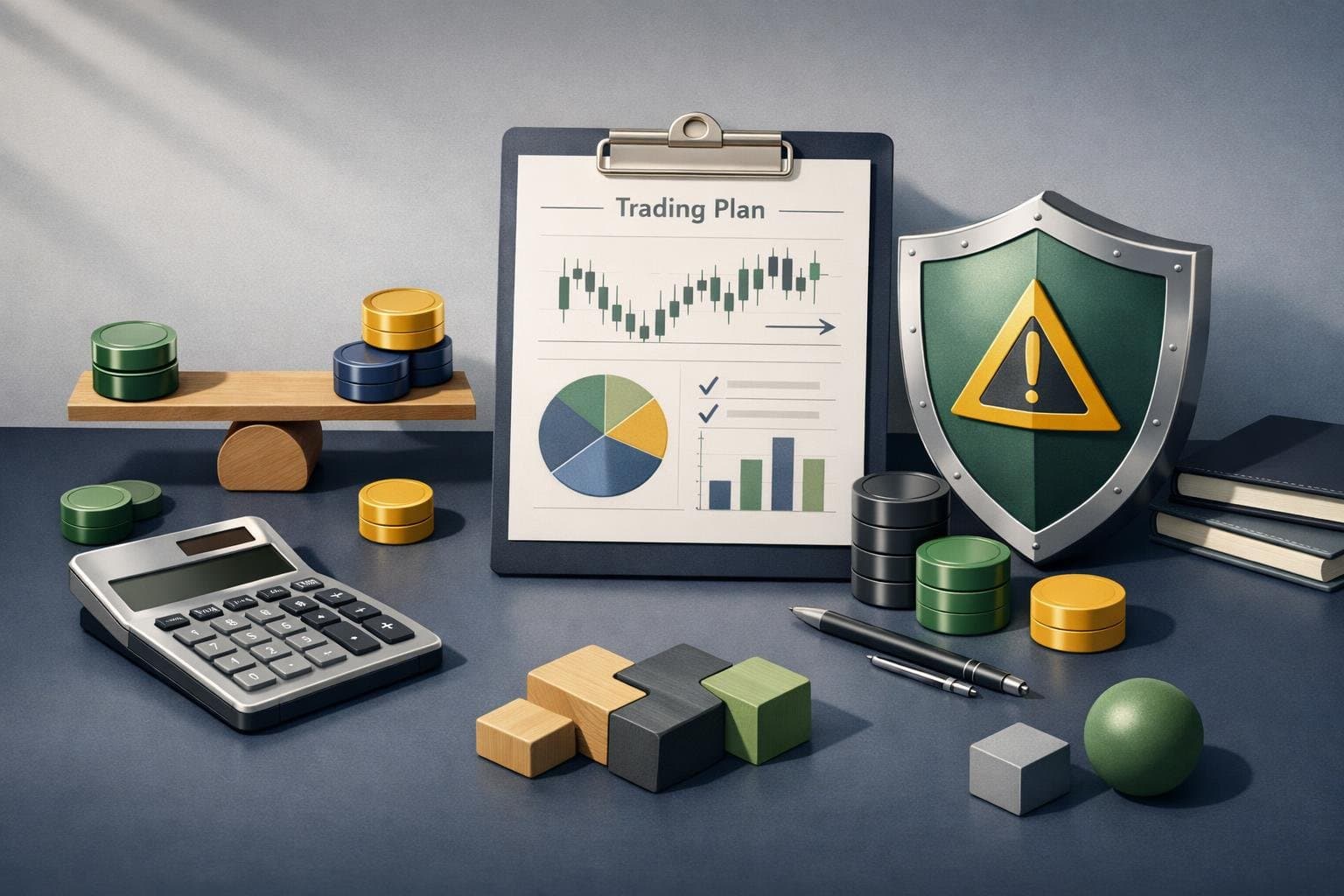
Why Risk Management Matters More Than Picking Winners
Most new traders focus obsessively on finding the next big winner. Professional traders focus on not losing money. This difference in mindset is why professionals survive long enough to compound their gains while amateurs blow up their accounts.
The Foundation: Only Risk What You Can Lose
This isn't just a legal disclaimer—it's the most important rule in crypto investing. Before you invest a single dollar:
- Calculate your total investable assets
- Determine what percentage you could lose entirely without affecting your life
- That's your crypto allocation—not a penny more
Position Sizing: The Key to Survival
Position sizing determines how much of your portfolio you allocate to a single trade or investment.
The 1-2% Rule
Never risk more than 1-2% of your total portfolio on a single trade. This means:
- If you have $10,000, risk no more than $100-200 per trade
- This allows you to survive a string of losses
- Even 10 consecutive losses only costs you 10-20% of your portfolio
Calculating Position Size
If your stop-loss is 10% below your entry:
- Maximum risk per trade: 2% of portfolio ($200 on $10,000)
- Position size = $200 / 10% = $2,000
Stop-Losses: Your Safety Net
A stop-loss automatically sells your position when it reaches a certain price, limiting your downside.
Setting Effective Stop-Losses
- Place stops at technical levels, not arbitrary percentages
- Account for normal volatility—too tight stops get triggered constantly
- Once set, don't move stops further away to "give it room"
Mental vs. Actual Stop-Losses
Mental stop-losses ("I'll sell if it hits X") rarely work. When the moment comes, emotions take over. Use actual stop-loss orders whenever possible.
Diversification: Don't Put All Eggs in One Basket
Asset Diversification
Spread investments across:
- Different cryptocurrencies
- Different sectors (DeFi, Layer 1s, etc.)
- Different risk levels (established vs. emerging)
Time Diversification (Dollar-Cost Averaging)
Instead of investing all at once:
- Invest fixed amounts at regular intervals
- Reduces impact of timing decisions
- Smooths out volatility over time
Taking Profits: The Hardest Skill
Knowing when to sell is harder than knowing when to buy.
Profit-Taking Strategies
- Scale out gradually – Sell portions at predetermined targets
- Take back initial investment – Once 2x, remove your original capital
- Set trailing stops – Lock in gains as price rises
Avoiding Greed
- Having a predetermined exit strategy removes emotion
- "No one went broke taking profits" – A cliché because it's true
- The market doesn't care about your purchase price
Emotional Management
Common Emotional Traps
- FOMO – Fear of missing out leads to buying tops
- Panic selling – Fear leads to selling bottoms
- Revenge trading – Trying to win back losses quickly
- Overconfidence – A few wins don't make you an expert
Managing Emotions
- Have a written trading plan and follow it
- Take breaks during high volatility
- Never make decisions when emotional
- Review trades regularly to learn from mistakes
Conclusion
Risk management isn't exciting, but it's what separates successful traders from those who lose everything. Master these fundamentals before you start trading, and you'll be ahead of 90% of market participants.