
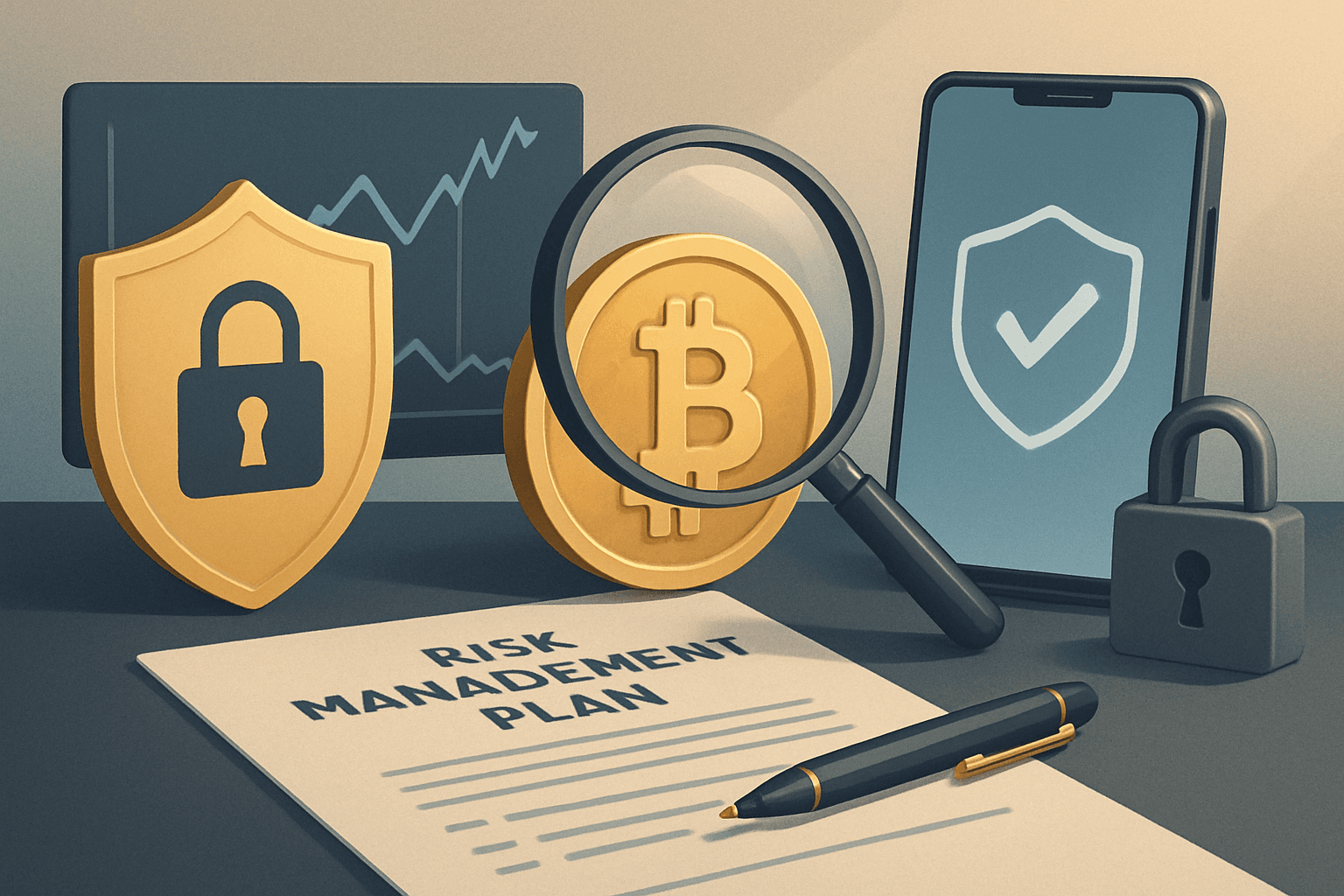
When you enter the world of cryptocurrency trading, it’s easy to get swept up in the excitement. But even seasoned traders will tell you: gains can appear and disappear in a flash. Staying in the game for the long haul relies less on predicting market swings and more on having a solid risk management plan tailored to your needs.
You might wonder, “What exactly is a crypto risk management plan, and how do I create one that’s actually useful in my day-to-day trading?” This article brings together essential building blocks and concrete steps so you can put together your own plan — one that fits your goals, accounts for your limits, and helps protect your portfolio from costly mistakes.
Let’s walk through the nuts and bolts of constructing a practical, personal crypto risk strategy. Whether you’re new to trading or just want a more organized approach, you’ll find tools and checklists you can apply immediately.
Why Every Trader Needs a Personalized Risk Management Plan
Cryptocurrencies are famously volatile. Prices can swing by double-digit percentages in a single day. Without a strategy that considers your unique finances, goals, and comfort with loss, it’s easy to find yourself making snap decisions or chasing losses. This is where a personalized risk management plan steps in.
Instead of relying on your nerves in the heat of the moment, you’ll have a clear set of guidelines to help you act calmly and consistently—regardless of what the market throws at you. A personal plan helps you avoid catastrophic mistakes, but also brings peace of mind. It allows you to keep trading as part of your routine life, rather than an all-or-nothing gamble.
- Keeps emotions in check during volatile periods
- Sets clear rules for losses and profits—before you’re pressured
- Protects you from overexposure to high-risk assets
- Supports steady growth by minimizing avoidable mistakes
Step 1: Clarify Your Personal Trading Goals and Limits
Before setting up any rules, get specific about why you’re trading crypto. Your risk plan should match your personal goals and financial situation. Are you hoping for quick trades, or are you investing for the long haul? How much are you genuinely comfortable losing—without stress impacting your health or finances?
Consider your experience level, how much time you can devote, and whether you’re trading with funds you absolutely can afford to lose.
Write your answers down. This turns vague intentions into clear boundaries that can guide your risk management choices moving forward.
- What is the purpose of your crypto trading?
- How much capital can you risk, if any, without impacting your quality of life?
- What is your timeline—are you more of a day trader, swing trader, or long-term investor?
- What level of loss (as a percentage or value) would make you stop trading altogether?
Step 2: Define Clear Rules for Position Sizing
Position sizing is about deciding how much of your portfolio you’ll risk on any single trade. This protects you from outsized losses if something goes wrong. There’s no universal formula, but most risk-aware traders cap their risk to 1-2% of their total portfolio per trade.
Calculating this number up front—and sticking to it—prevents spur-of-the-moment bets that could hurt your overall portfolio. Adjust your position sizes as your total assets grow or shrink.
Be strict with yourself; wandering from your preset position size rules often leads to taking losses you never intended.
- Decide your maximum risk per trade (usually 1-2% of total portfolio)
- Recalculate position sizes if your portfolio changes substantially
- Smaller position sizes for more volatile or unfamiliar coins
- Consider a separate size limit for experimental or low-liquidity tokens
Step 3: Set Up Practical Stop-Loss and Take-Profit Strategies
Both stop-loss and take-profit points are a core part of any solid risk management plan. The stop-loss is where you’ll cut your losses if a trade goes against you. The take-profit level is where you’ll cash out gains without getting greedy, missing reversals, or letting profits evaporate.
You can use fixed percentages, technical chart levels, or even trailing stops, but consistency is key. Deciding on these levels before entering a trade keeps you grounded and avoids emotional decisions as the market gets lively.
Review your stop-loss and take-profit rules regularly and adjust for market conditions or changes in your personal situation.
- Set a stop-loss for every trade, based on a percentage you’re comfortable with losing
- Identify take-profit targets ahead of time to lock in gains
- Consider using trailing stops to capture upside while protecting from reversals
- Never move stop-loss further away after placing it—this increases risk
Step 4: Diversify—But Stay Organized
Diversification reduces your exposure to any single asset or sector. Even if you feel confident in a project, placing all your funds in one coin or category is a recipe for stress—and potentially steep losses.
Effective diversification means spreading your funds across coins, sectors, or even different types of assets—and keeping track. However, be careful not to over-diversify to the point where you can’t manage or monitor your positions.
Use a simple spreadsheet or portfolio tracker to log what you own, why you own it, and your allocation targets. Review this regularly as new opportunities (or risks) appear.
- Limit high-risk coins to a set percentage of your overall portfolio
- Include both large-cap and smaller, promising projects—within reason
- Maintain a record with purchase price, rationale, and expected outcome
- Adjust allocations as needed if one coin grows disproportionately
Step 5: Prepare for the Unexpected—Emergency Plans and Mental Resets
Crypto markets can be unpredictable. Hacks, exchange outages, regulatory announcements, or market-wide crashes can happen without warning. Having a plan for events outside your control is a mark of a cautious, resilient trader.
Decide in advance what you’ll do if your exchange is suddenly inaccessible, if your positions fall dramatically overnight, or if there’s breaking news. Some traders take a break, some liquidate a portion for peace of mind, and others wait—what matters is choosing your strategy *before* panic sets in.
Resetting your mindset after a setback is as important as any technical measure. Recognizing and learning from mistakes without chasing losses is part of sustainable trading.
- Have a backup plan for exchange outages or wallet lockouts
- Decide how you’ll handle sudden portfolio drops (e.g., reduce exposure, or hold)
- Use a checklist to review lessons learned after losses or wins
- Take periodic breaks from trading to maintain emotional discipline
Step 6: Track Your Performance and Revisit Your Plan Regularly
No plan is truly ‘set and forget.’ The crypto landscape shifts quickly; your personal situation might, too. Make tracking and occasional reviews part of your routine. Track each trade’s size, entry/exit price, rationale, and result—even simple notes can reveal patterns over time.
At least once a month, review your overall performance against your goals. Did you stick to your own rules? Were there recurring mistakes? Success in trading, much like any skill, comes from honest self-reflection and ongoing learning.
Don’t be too hard on yourself for small losses or mistakes—use them to refine your risk management approach.
- Log every trade—what, why, entry and exit points, and the outcome
- Schedule monthly reviews to compare your current plan to actual behavior
- Watch for warning signs like frequent rule-breaking or emotional trading
- Update position sizes, stop-loss tactics, and diversification rules as your assets or the market change
Building Your Checklist: Summary Points for a Solid Risk Management Plan
Risk management in crypto isn’t one-size-fits-all. The best plan is one that matches your reality, is written down, and is referenced often. Here’s a simple checklist you can adapt for your personal plan. Keep it somewhere visible, and update it as your trading journey evolves.
Remember, the goal isn’t to eliminate risk — that’s impossible — but to control it intelligently, stay calm in all market conditions, and give yourself the best chance at a steady journey.
- Clearly state your trading purpose and risk tolerance
- Set max percentage risk per trade and check position sizes
- Establish stop-loss and take-profit rules for every trade
- Diversify across assets but keep portfolio manageable
- Prepare responses for unexpected scenarios
- Track trades and review your plan regularly
Frequently asked questions
Can I automate my risk management plan?
Some exchanges and trading tools offer features like stop-losses or portfolio rebalancing, which can help automate parts of your plan. However, critical decisions—like setting your risk limits or updating your plan based on real-life changes—should always be made by you, based on careful thought and reflection.
How often should I update my crypto risk management plan?
Review your plan at least every month, or whenever your financial situation or the market environment changes significantly. Frequent check-ins help you stay accountable and adapt as you gain experience.
What if I keep breaking my own risk management rules?
If you notice you’re ignoring your plan, take a step back. Pause trading for a few days, reflect on why you broke your rules, and adjust your plan to be more realistic. Sustainable progress comes from self-honesty, not perfection.
Conclusion
Developing a personal crypto risk management plan is an investment in your own safety and clarity. Instead of treating trading as a gamble, you’ll have a clear map for navigating ups and downs.
There’s no way to remove risk from crypto—but with a practical plan, you can face volatility with confidence, limit mistakes, and trade as part of a balanced, healthy strategy.
Commit to reviewing and refining your plan regularly. When the next market storm hits, you’ll be glad your decisions are driven by thoughtful preparation—not spur-of-the-moment panic.
Related reading
- Crypto Portfolio Diversification: Practically Reducing Your Trading Risk
- Smart Position Sizing and Stop-Loss Strategies: Protect Your Crypto Portfolio
Disclaimer: This content is for educational purposes only and should not be considered financial or investment advice. Always do your own research before making financial decisions.