
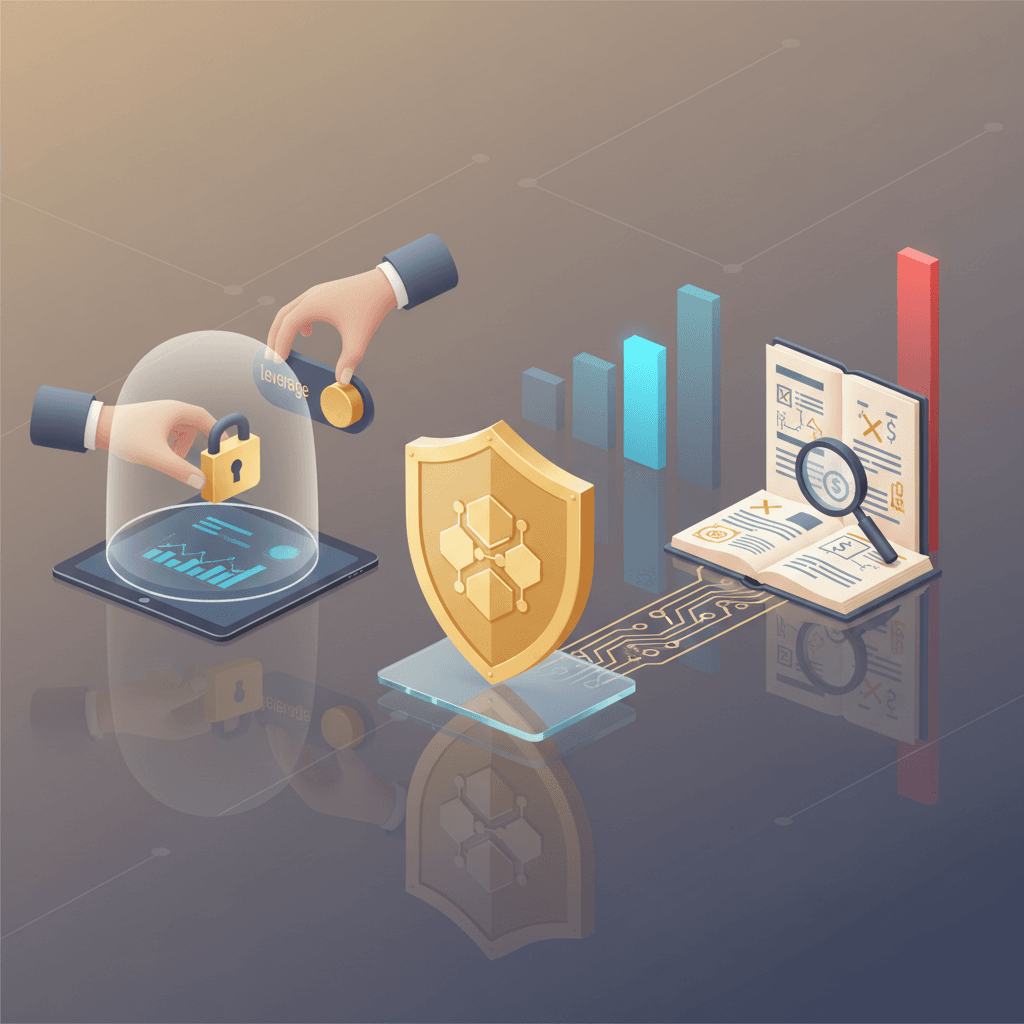
If you’ve spent any time watching crypto traders online, you’ve probably seen big returns advertised for “100x leverage” and other turbo-charged trading methods. But what doesn’t make the highlight reels? The real risks—small and large—that haunt even the most careful traders the moment they use leverage.
The truth is, leveraging amplifies everything: gains, losses, and especially risks. Most guides focus on liquidation, but in real life, the dangers are messier. One missed detail, mistake, or bit of bad luck can sweep a leveraged position into costly territory. And it’s easy to miss warning signs until it’s too late.
This article digs into real-world risks behind crypto leverage trading, surfaces practical examples, and offers a checklist to help you spot and avoid the traps—before you put a single dollar on the line.
What Makes Crypto Leverage Trading Uniquely Risky?
Leverage trading in crypto can look straightforward on the surface—borrowed money, increased buying power, big potential returns. But unlike traditional markets, crypto’s unique mix of volatility, inexperience, and infrastructure blindsides many everyday users.
Traditional finance has some guardrails: tighter regulations, slightly less volatile assets, margin requirements. In crypto, it’s possible to take on huge leverage, sometimes hundreds of times your original stake, on fast-moving assets. Exchanges compete to keep you trading, not to keep you safe.
The result? Even minor price swings can quickly wipe out your position or cascade into losses you didn’t expect. Add in fast-changing margin requirements, 24/7 markets, and the confusion around complex order types, and it’s clear: crypto leverage is a powder keg for the unprepared.
- Ultra high leverage offers (e.g., 50x, 100x) with minimal upfront funds
- Nonstop 24/7 trading, making it hard to monitor positions constantly
- Rapidly changing rules or margin requirements by exchanges
- Prone to sudden price swings and low liquidity events
Early Warning Signs You Might Be Taking on Too Much Risk
Recognizing risk before it becomes a problem is crucial in leveraged trading. Many traders only realize they’re overexposed once liquidation warnings flash or their balances vanish. Instead, learn to spot early warning signs and act before your position gets dangerous.
Some red flags are psychological—a feeling of FOMO, needing to ‘get back losses’, or upping leverage for quick gains. Others are technical: large position sizes relative to your total assets, unclear trade plans, or relying on hope instead of set exit strategies.
Use these warning signs as a recurring checklist. If several apply, pause and reassess rather than doubling down.
- Not calculating your maximum loss before opening a position
- Trading leverage on assets you barely understand
- Increasing position size after a loss, instead of sticking to a plan
- Relying on exchange-provided safety nets as your only protection
- Letting emotions (greed, revenge, fear) guide trade size or entry
Hidden Dangers of Exchange Infrastructure and Outages
Crypto exchanges run 24/7, but they’re not infallible. Maintenance windows, service outages, rapid forced liquidations—they can all hit at the worst possible time, especially in high-volatility moments. When you’re trading with leverage, these disruptions can turn what would be manageable losses into major wipeouts.
Unlike traditional brokerages, some crypto exchanges don’t always give advance warning—or give any compensation—if their platform fails during market chaos. Orders may get ‘stuck,’ funds may be temporarily inaccessible, or partial liquidations could compound losses beyond your control.
Key lesson: Never assume the infrastructure will hold up perfectly, especially during major market swings.
- Site outages or overloaded trading engines during sharp market moves
- Locked or unresponsive accounts when you need to act fast
- Delayed order execution that leaves positions open longer than intended
Real-Life Ripple Effects: How Leverage Builds Systemic Risk
Leveraged positions aren’t just risky for individual traders—they amplify risk for exchanges, protocols, and the wider crypto markets. When many traders take large leveraged positions on the same assets, price swings can trigger mass liquidations. This drives prices down further in a feedback loop.
These so-called ‘liquidation cascades’ are brutal. You don’t have to be part of the largest positions to get hurt; even small traders can find themselves swept up in a chain reaction, especially if an exchange’s risk engines are slow or under stress.
Paying attention to the leverage ratios and open interest—not just for your trade, but across the wider market—can help you spot when the risk of a domino effect is growing.
- Mass liquidations driving rapid, sometimes irrational price drops
- System slowdowns making risk management harder for all traders
- Exchange insurance funds may be insufficient during extreme events
Checklist: Steps to Reduce Your Leverage Trading Risk (Before You Enter a Trade)
Before you commit a dollar to a leveraged crypto trade, walk through a safety-first checklist. This isn’t just about protecting your funds—it’s about building discipline and reducing the risk of making irreversible mistakes. Too many traders skip this due to excitement or FOMO, only to regret it later.
Here’s a concrete list of steps. Make them your go-to routine, whether you’re opening your first trade or your hundredth.
- Limit leverage: Default to the lowest possible leverage—never the max allowed.
- Risk-per-trade: Decide in advance how much you can lose per trade (e.g., 1-2% of your trading balance).
- Understand liquidation: Know where your position will be liquidated and what triggers it.
- Use stop-losses: Set clear, mechanical exit points. Don’t rely on ‘mental’ stops.
- Keep a trade journal: Record your entry, exit, risk, and reasoning for every leveraged trade.
- Review exchange reliability: Trade only on exchanges with a proven uptime and responsible liquidation processes.
How to Monitor Leverage Risk in Real-Time
Once your leveraged trade is live, your main task is monitoring and managing risk—not chasing extra returns. Crypto markets don’t close, so your attention and preparation need to reflect that reality.
Real-time risk monitoring means using technical tools—like price alerts and auto-close features—but also staying aware of exchange status, upcoming market-moving events, and even your own stress levels.
Don’t set-and-forget: leverage multiplies risk every second your position is open. Shorter timeframes and strict discipline often work better than holding positions overnight or across periods when you can’t watch the market.
- Set up automatic price alerts at key support/resistance levels
- Monitor your margin ratio on the exchange dashboard
- Schedule ‘position check-ins’ at regular intervals
- Stay updated on major news and exchange announcements
What to Do When a Leverage Trade Starts Turning Against You
Every trader faces losses—especially with leverage. The difference between a manageable loss and a disastrous one is how early you react, and how disciplined your response is. Many who ride positions “just a little longer” end up taking total losses they could have avoided.
If your position moves against you, your safety steps should already be clear. Don’t add more margin to postpone liquidation unless it fits your pre-trade plan. Don’t hope for a bounce while watching your margin dwindle.
Remember: pulling out with a small, controlled loss is survival. Chasing “break-even” with extra leverage or funds is how losses compound. Build the habit of acting quickly and sticking to your plan, no matter how tempting it is to do otherwise.
- Close losing positions automatically at your pre-set stop loss level
- Avoid adding more collateral to losing trades unless it’s part of your overall risk plan
- Exit trades before scheduled exchange maintenance or known market-moving events
Frequently asked questions
How does leverage amplify both gains and losses in crypto trading?
Leverage lets you control a larger position with less capital, so small price moves cause larger percentage gains or losses. While this can multiply profits, it also makes losses come faster and larger—often leading to quick liquidations, especially in volatile crypto markets.
Is it safer to trade leverage on large-cap crypto assets?
While large-cap assets like Bitcoin or Ethereum are less prone to wild swings than small tokens, all crypto assets are volatile compared to traditional markets. Leverage still increases the risk of rapid liquidations across all coins, especially during market-wide volatility.
What’s the main cause of unexpected liquidation in leveraged trading?
Unexpected liquidation often happens due to minor, rapid price swings or due to exchange issues (outages, slowdowns) that prevent you from managing your position. Poorly set stop losses and not monitoring margin ratios are frequent contributing factors.
Conclusion
Leverage trading attracts with promises of outsized rewards, but in crypto, the risks are steeper and less forgiving than most beginners realize. Markets move fast, exchanges sometimes fail, and psychology can quickly work against you.
Use the checklists and warning signs in this article each time you consider a leveraged trade. Risk, in real life, is not just about numbers on a screen—it’s what happens when lots of little decisions add up, for better or worse. Small steps to improve your discipline today can make the difference between surviving for tomorrow or wiping out in a single moment.
Above all, treat every leveraged trade as a test of safety, not a shortcut to fast gains. Those who last in crypto leverage are those who treat risk management as a non-negotiable part of their process.
Related reading
- Understanding Margin Liquidation Risks in Crypto Leverage and Futures Trading
- What Every Crypto Trader Should Know About Isolated vs. Cross Margin Leverage Risks
Disclaimer: This content is for educational purposes only and should not be considered financial or investment advice. Always do your own research before making financial decisions.